


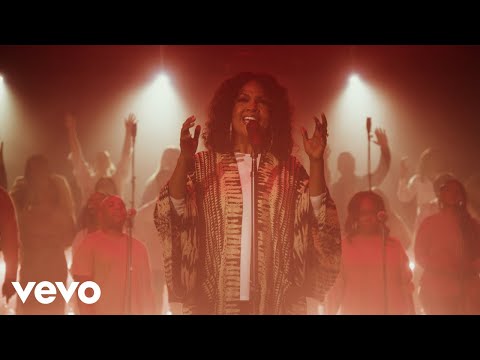
CeCe Winans Makes Waiting Sound Active
“Come Jesus Come” holds one request so steadily that restraint becomes the drama.
Everything we've published, newest first — 133 pieces across features, testimony, behind-the-song reporting, legacy writing and lists.

The Emmy- and Grammy-nominated musician speaks about calling, faith, grief, the mountain view outside her window and why she has never made music to keep pace with an industry calendar.
“Come Jesus Come” holds one request so steadily that restraint becomes the drama.
CeCe Winans lets the lyric carry the weight and keeps the arrangement disciplined.

“Hard Fought Hallelujah” earns its lift by refusing easy triumph.

“YOUR WAY'S BETTER” is quick, warm and sharper than its casual surface suggests.
Forrest Frank builds a morning song from texture, repetition and a very small drum kit.
From the weight of “Hard Fought Hallelujah” to collaborations spanning generations, Brandon Lake's music continues to live where worship, struggle and surrender meet.

“God I'm Just Grateful” asks for nothing, which turns out to be the hard version.
The live recording treats repetition as discovery, not padding.

The audience shifted first. The catalogue is catching up.

The 41st Stellar Gospel Music Awards put a broad Gospel field on one Charlotte stage — from established Motown Gospel names to independent releases.
An editorial selection, not a chart. Fifteen records currently holding our attention.

Elevation Worship builds a large room around a remarkably plain melody.

CeCe Winans — how a melody built for a room ended up sounding like a private conversation.
Some worship songs ask for something. Others arrive after the asking is over.

A patience song with the tempo to prove it.
Few voices have traveled across generations of Gospel music with the same authority. Her newest chapter shows why.
Brandon Lake — a title that argues with itself before the first verse.

“WASHED” is bright, clipped and completely comfortable in youth-culture production.
Dusty Bibles, prodigals and demons aren't exactly conventional pop vocabulary. That's precisely the point.
“GOODBYE YESTERDAY” uses breakup-song grammar for spiritual release.
Josiah Queen — an object doing the work a slogan usually does.
The format that fits playlists least is the one doing the most interesting work.
Short songs. Modern production. Internet-native culture. Ancient subject matter.
“Dusty Bibles” is tactile songwriting in a genre that often settles for abstraction.
Forrest Frank — surrender written into the hook position.
An editorial selection rather than a ranking — ten artists whose current work is shaping how the format sounds.
“OKAY!” is barely an argument. That is the design.

“What An Awesome God” puts scale in the melody before the production arrives.
How a church-affiliated catalogue became one of the most collaborative operations in the format.
The biggest songs of faith are not always songs of certainty. Sometimes they are records of endurance.
Nine nominations for Wickham, seven for Winans, and a New Artist field that shows how quickly Christian music's center is shifting.
“Homesick For Heaven” chooses ache over awe and is stronger for it.

Leanna Crawford — the most quoted passage in the Psalter, left undecorated.
“Alleluia” — Elevation Worship, Chandler Moore & Chris Brown.

“Mighty Name Of Jesus” is repetition with purpose and no decorative detours.
Eight shifts already visible in the current release cycle, and the artists making them audible.
Psalms are showing up in the title field again — and not as decoration.

Mark Gutierrez leads a live declaration that gains meaning through use.

Seph Schlueter — a plain idea, structured well enough to travel.

Kari Jobe Carnes and Rachel Halbach make patience feel like arrangement.

Elevation Worship and ELEVATION RHYTHM are working the same subject from opposite ends of the production spectrum.
“demons” is the plainest title in his catalogue and the most anxious song in it.

“Left It In The River” uses baptism imagery without polishing away the mud.
The category was never a sound. It was a distribution channel.

The live recordings are the catalogue. Everything else is a summary.
“Counting My Blessings” is simple by conviction, not by accident.
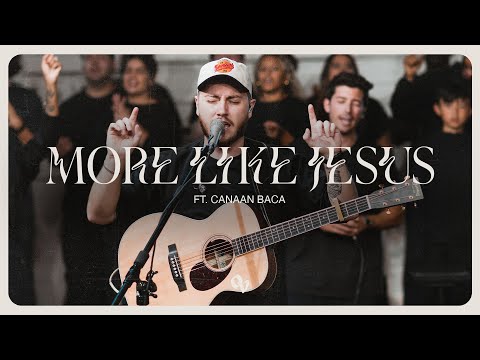
“More Like Jesus” is plain-spoken worship writing that trusts the listener.

ELEVATION RHYTHM and Gracie Binion write a break-up song addressed to a former self.
“Still Waters” treats familiar scripture as living language rather than a souvenir.

Same address, different constraints — and a catalogue that behaves like pop.
Jamie MacDonald — baptism imagery at the pace of a folk song.
Gateway Worship builds at conference scale without starting there.
CeCe Winans — one plea, held long enough that waiting becomes the subject.
“Homesick For Heaven” is the outlier in a catalogue built on settled awe.

Gateway Worship's “Known By You” turns exposure into comfort.
Two decades in, the songs are still pointed at scale — and the writing keeps getting plainer.
The production references have changed. The congregational math has not.

“One More Day” stays inside a minor mood longer than Christian radio usually permits.
“THANK GOD I'M FREE” gets to the hook quickly and stays there.

“No One Like The Lord” keeps the confession intact while the rhythm travels.
Matthew West — one instruction, arranged so it never becomes a lecture.
Discovery moved. The infrastructure has not finished noticing.
“More Like Jesus” is a prayer with no escape clause.
Josiah Queen's “The Prodigal” spends its runtime on the road rather than at the door.

A catalogue built on the decision not to demonstrate.
“At The Altar” — ELEVATION RHYTHM with Tiffany Hudson & Abbie Gamboa.
“The Truth” is bright on the surface and unwilling to soften underneath.
Megan Woods — pop structure with an uncomfortable word at the center.

Worship Circle's “Your Grace is Enough” does not chase a reinvention it does not need.

The Museum of Christian & Gospel Music, Gaither Music and the GMA built a shared fan experience around catalog, performance and discovery.
“The Prodigal” stays on the road instead of rushing the reunion.

“Made For More” pairs two steady voices and lets agreement become the drama.
“Psalm 8 (Hallé)” — Phil Wickham.
Bethel Music and Jenn Johnson leave space for a Gospel voice that hears the pocket differently.
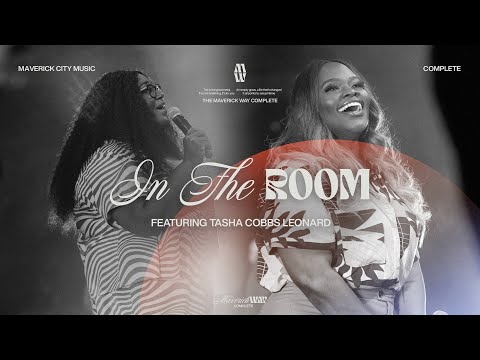
On “In The Room,” four credited voices decline to take the lead — and the song gets larger for it.
“Counting My Blessings” is structurally simple and stubbornly durable.
Maverick City Music, Tasha Cobbs Leonard, Chandler Moore and Naomi Raine share one live frame.
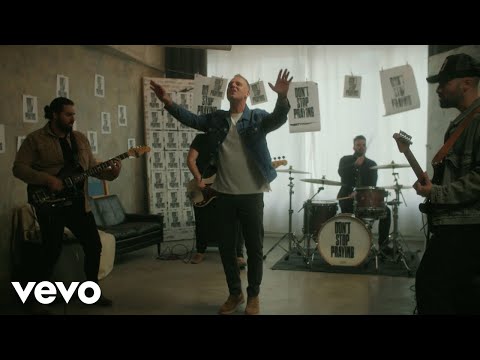
“Don't Stop Praying” avoids the lecture the title invites.
Her entrance on “In The Room” adds weight without slowing the shared performance.
Cover art in the format has moved from stock inspiration to design with a point of view.
Inside a large live collaboration, the smallest phrasing choices carry furthest.
“The Truth” keeps circling the word it could easily walk away from.
A precise lead performance inside Elevation Worship's wide production.

Two versions of “Mighty Name Of Jesus” show what a room does to a song.
“GOODBYE YESTERDAY” works because the vocal believes the separation before the beat celebrates it.
“One More Day” takes its time in a format that rarely allows it.
“THANK GOD I'M FREE” is engineered to move, but its best detail is slightly behind the beat.
The phrasing that defines modern worship has a documented origin.
Gaither Vocal Band provides the frame; Blue brings a present-tense voice.
“No One Like The Lord” is a reminder that worship music has many first speakers.
“Don't Stop Praying” stays at speaking distance.
Conference-scale live recording is its own craft, and “Who Else” is a good lesson in it.
Brandon Lake and CeCe Winans share a hook without flattening their histories.

“Mighty Name Of Jesus” — Hope Darst & Josh Baldwin.
Flat credits, shared arrangements, and a catalogue that resists the lead vocal.
“Your Grace is Enough,” “I Can't Even Walk” and the long life of a usable song.
Live worship releases from Passion, Gateway and Bethel, and what each room asked of the song.
The GMA and Recording Academy expanded the March campaign across streaming services, radio, tours and a new run of performance videos.
Credit lists got longer. Here is what that actually changed.
Rap, Afrobeats and R&B artists are building global faith audiences faster than legacy format labels can describe them.
Thirty years with Capitol CMG and a catalog that keeps finding new listeners: Gospel's long tail is not theoretical.
Not every record needs a room. Some need a kitchen at 6am.
The Kingdom + Culture reception gathered artists, labels, platforms and trade organizations around the people behind the nominations.
“Come Jesus Come” and “Hard Fought Hallelujah” led a year when the Academy's faith categories reflected both legacy and crossover momentum.
A younger, streaming-forward audience is moving faith records beyond the old bookstore-and-radio lane.
A choir is not just a larger vocal. It is the sound of individual breath becoming a shared position.
A repeated line can flatten a song—or reveal something the first pass could not carry.
Crowd noise is not enough. The room has to change the decisions being made onstage.
Small drums, close vocals and records built for headphones changed the emotional scale of the format.
A simple idea is not an unfinished one when every word knows its job.
A specific life gives a listener somewhere concrete to stand.
Faith music now has to work in a shared room and in the private hour after it.
Take away the ceiling and a song has to reveal whether the melody can carry its own weight.
The written lyric states the position. The ad-lib tells us what it costs the singer to stand there.
Five good songs are not automatically a sequence. The order needs an argument.
A hook can earn attention. The rest of the song has to decide what to do with it.
Silence does not interrupt the arrangement. Sometimes it is the arrangement.
The audience becomes part of the arrangement when the stage is willing to listen back.
A hymn survives because it was designed to be carried by people, not protected by one recording.
A singer can sit behind the beat and make a familiar sentence feel newly considered.
The bridge should change the meaning of the return, not simply make it louder.
Who carries the melody, who answers and who gets heard are musical decisions with social meaning.
Faith contains tension, boredom, grief and uncertainty. The production vocabulary can contain them too.
A slower tempo does not guarantee depth, but it can refuse the pressure to arrive too quickly.
One voice begins the sentence so another voice—and eventually the room—can complete it.
Imperfection becomes expressive when the song has brought the singer to the edge honestly.
The gate became an algorithm, the opening seconds gained power and genre borders became easier to cross.
Not every closing song needs to peak. Some are meant to send the room out gently.
The work is to preserve the passage's movement, not merely fit its famous words into a chorus.